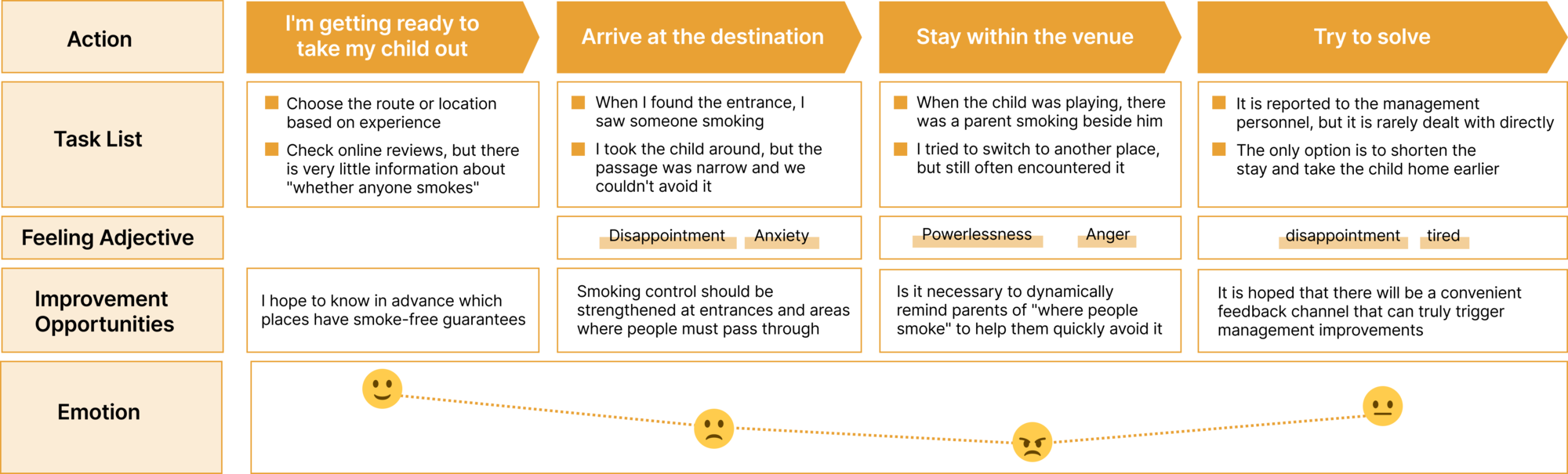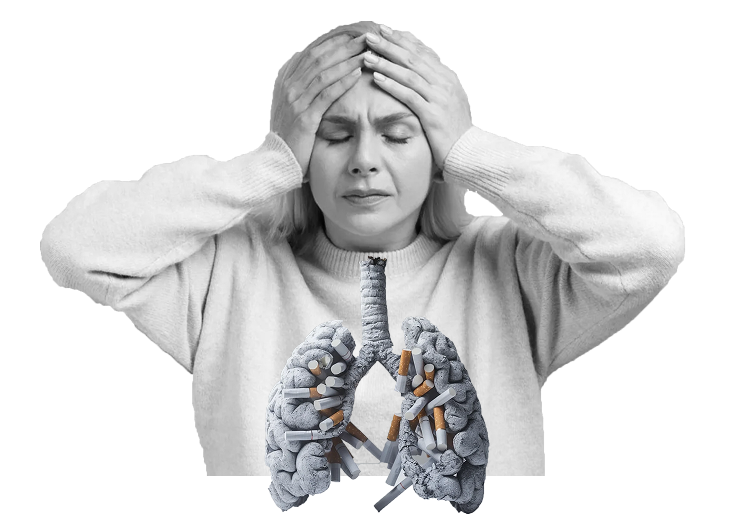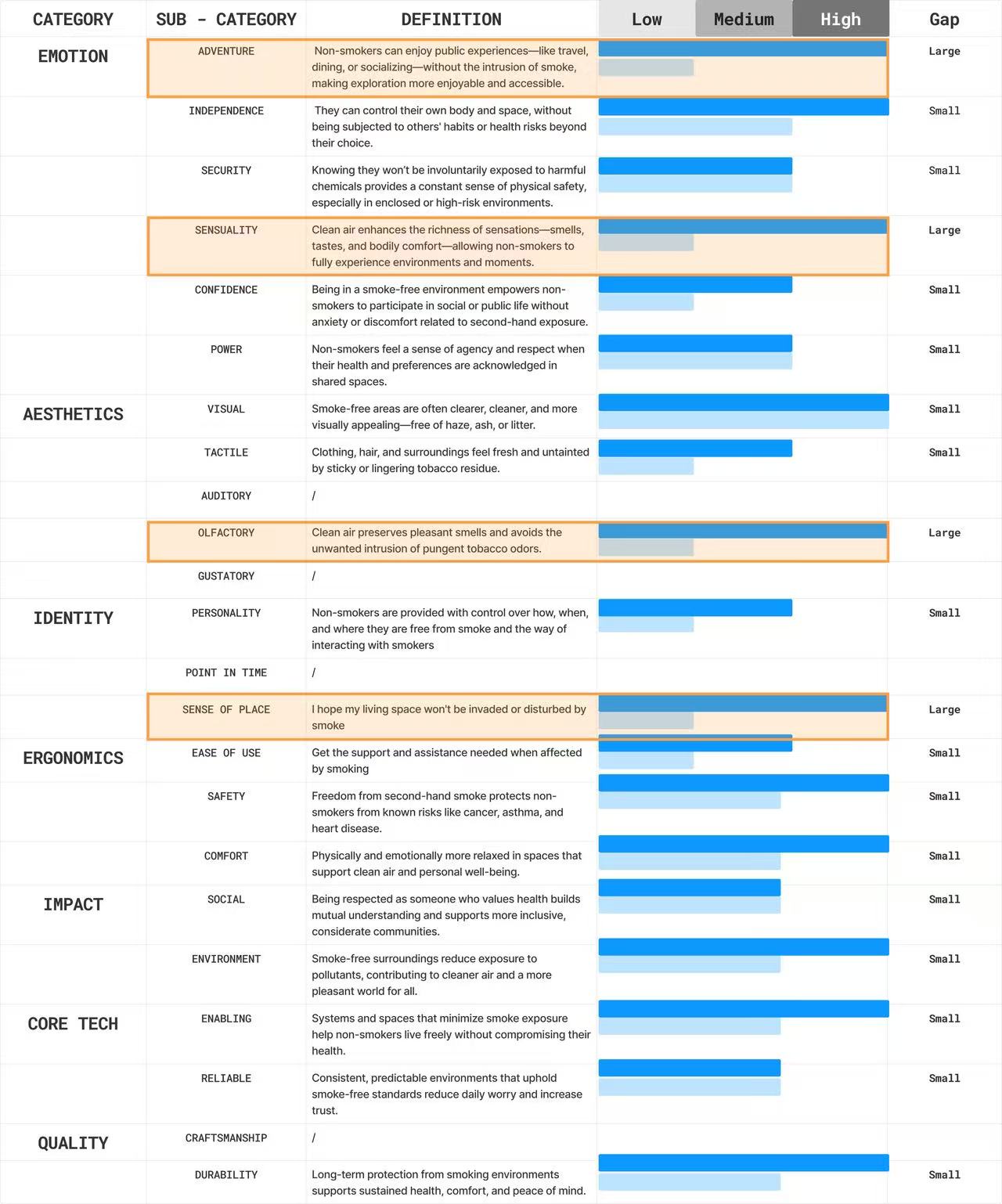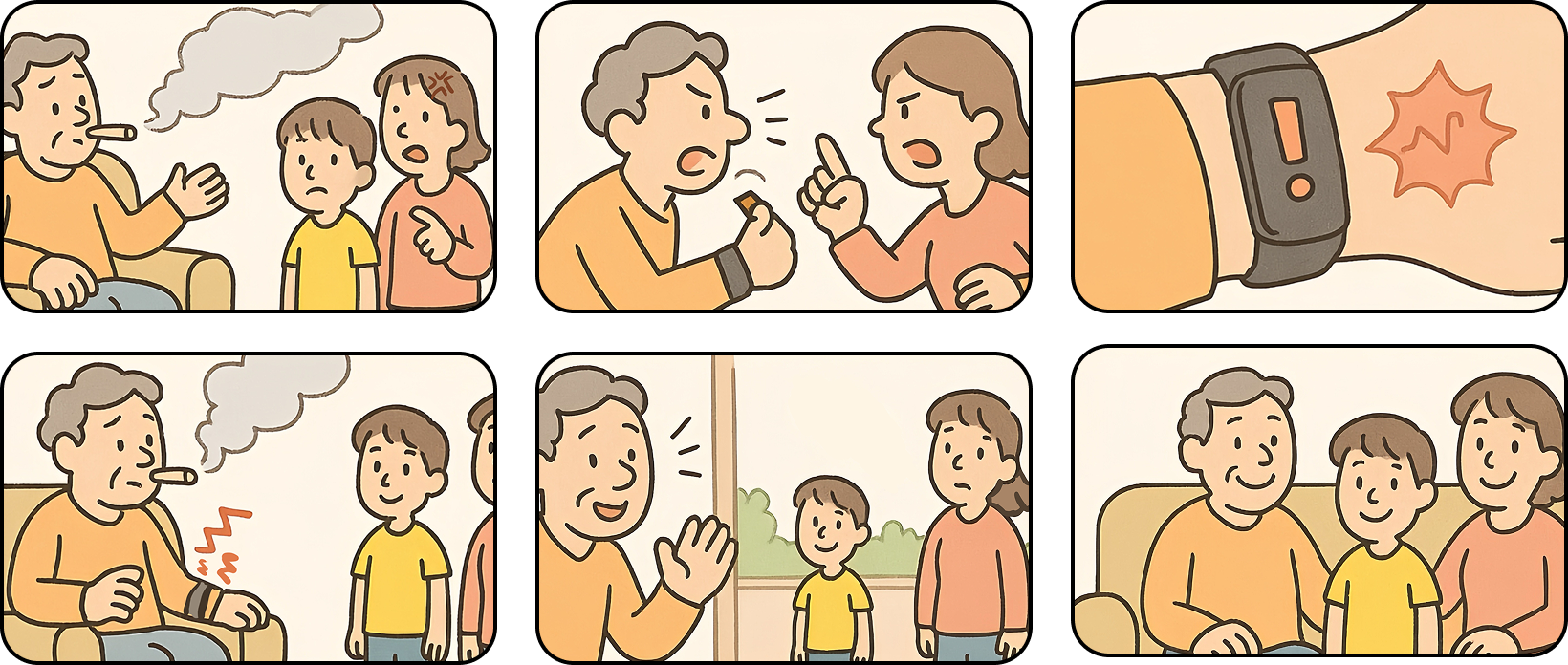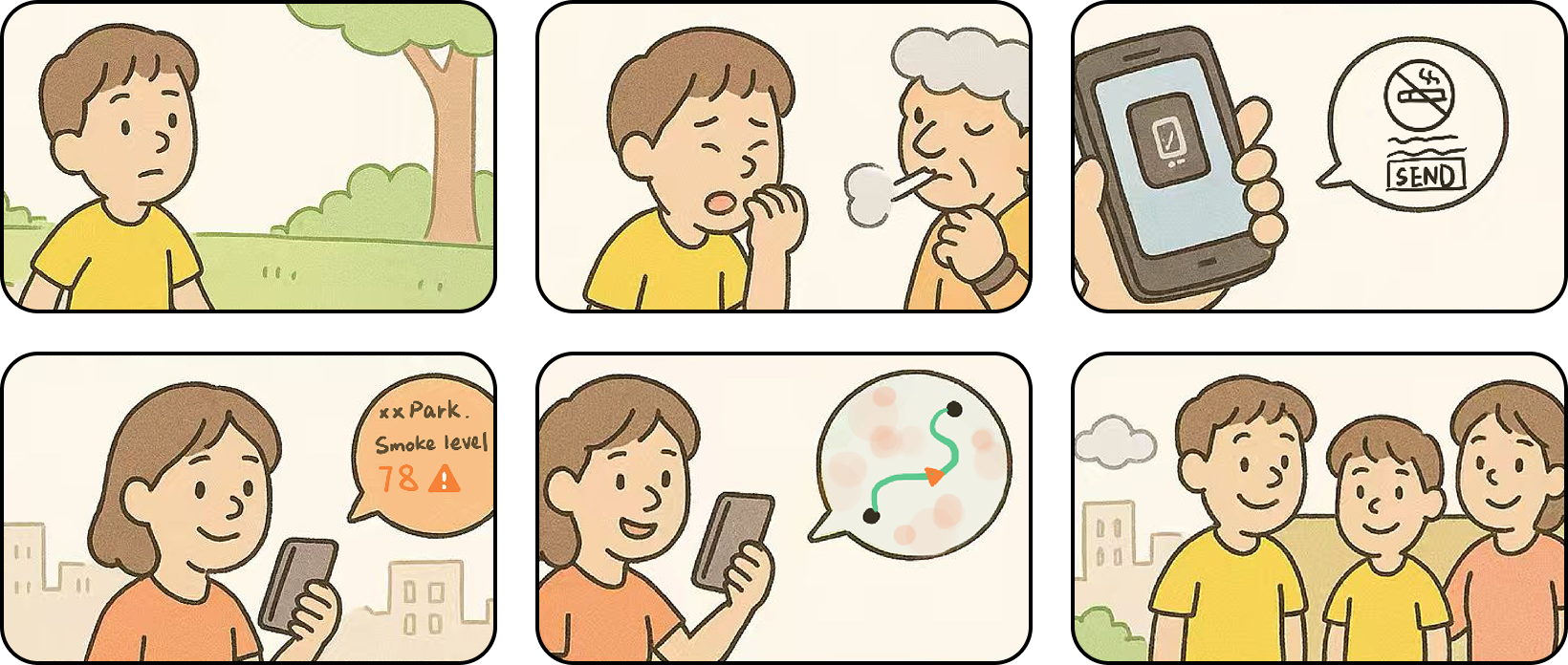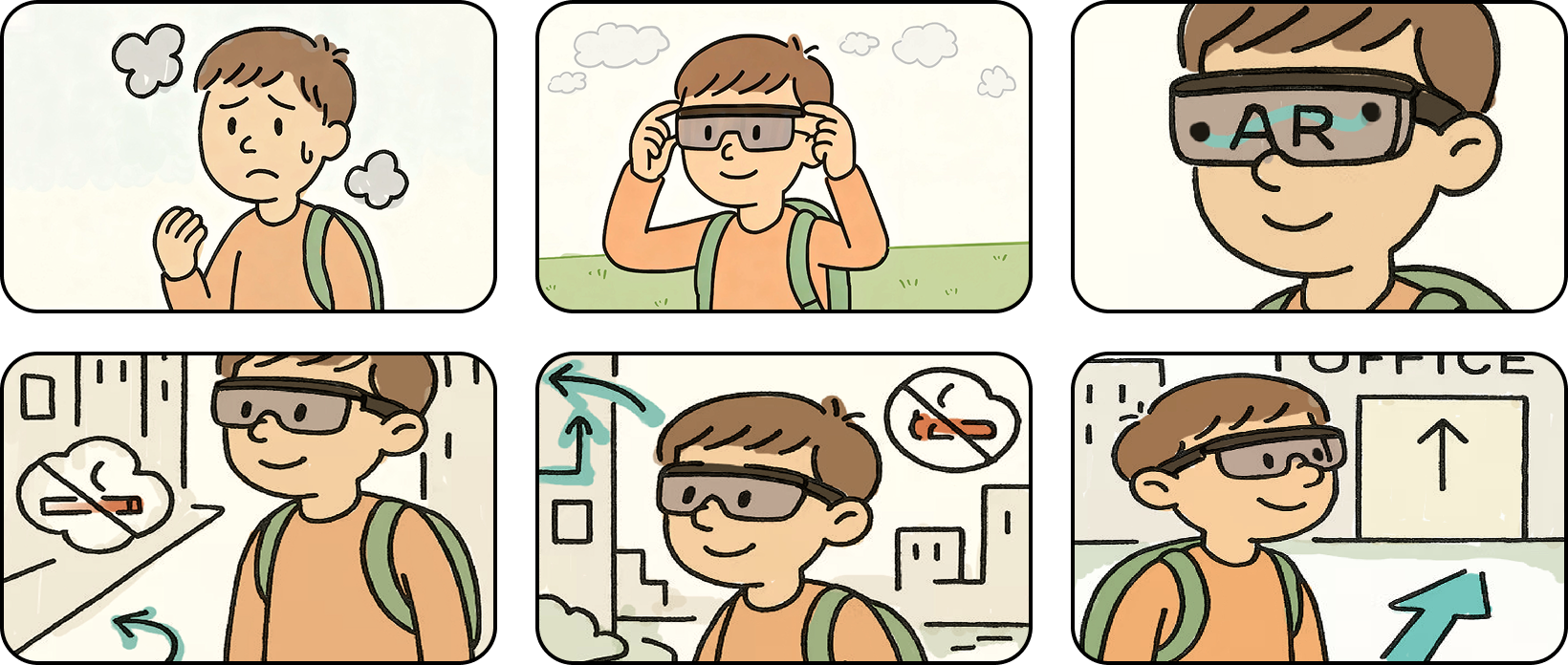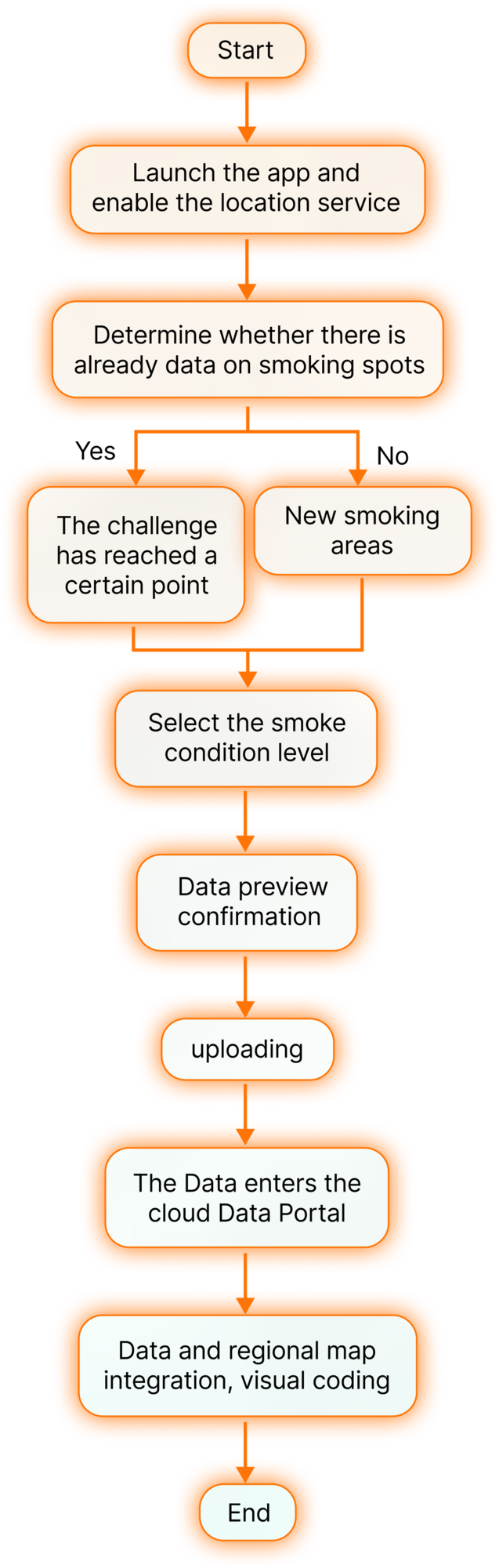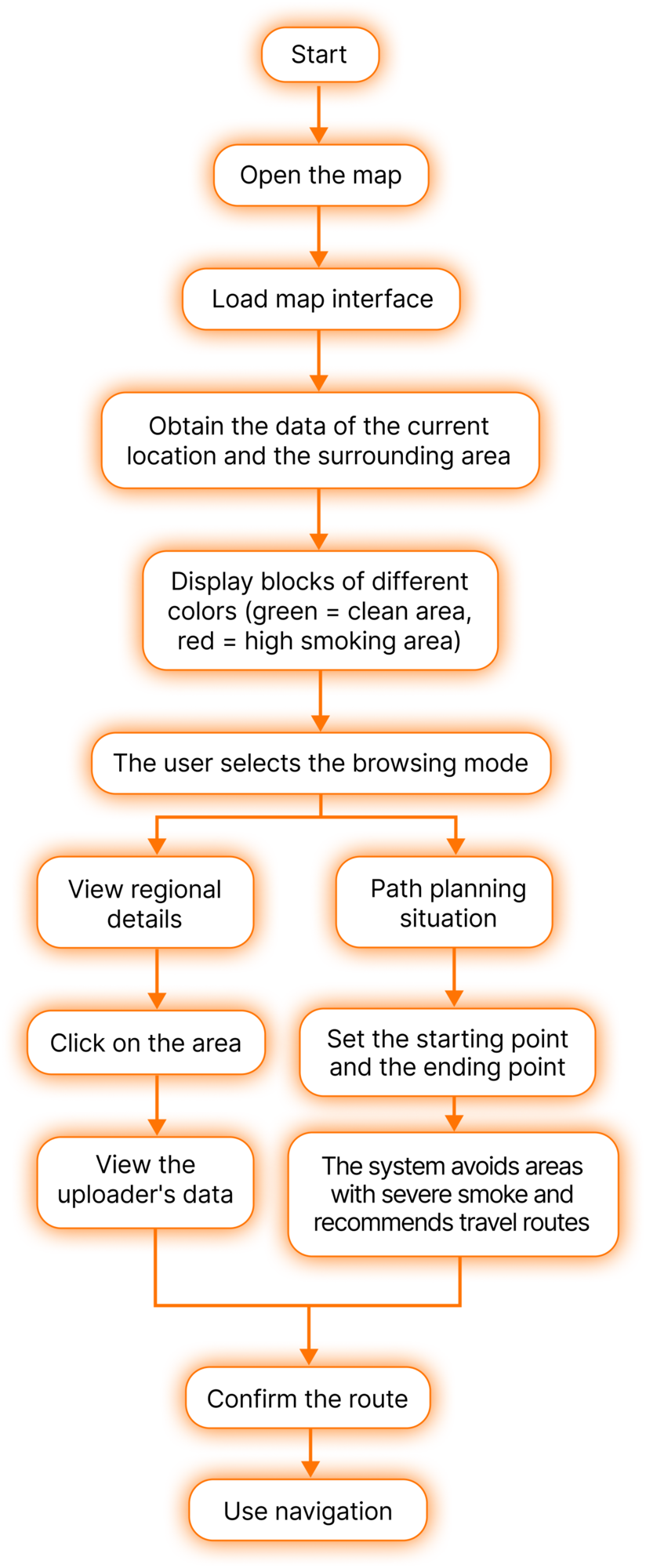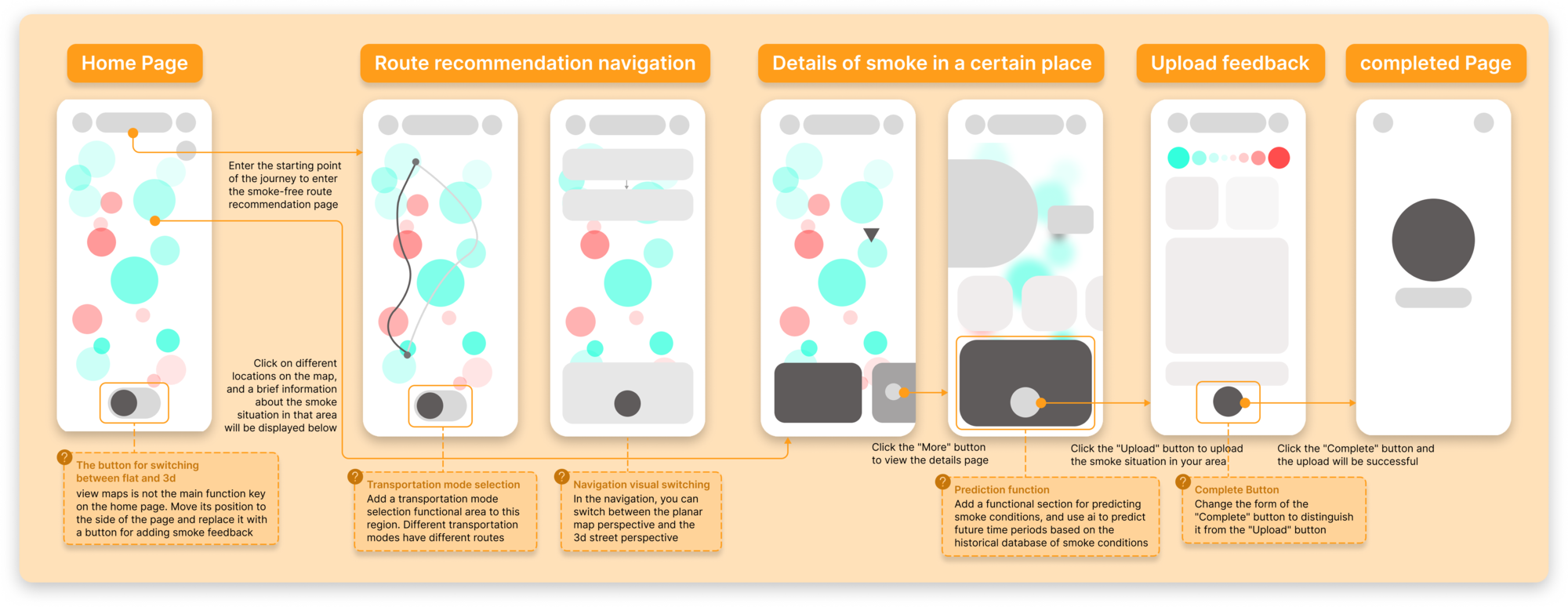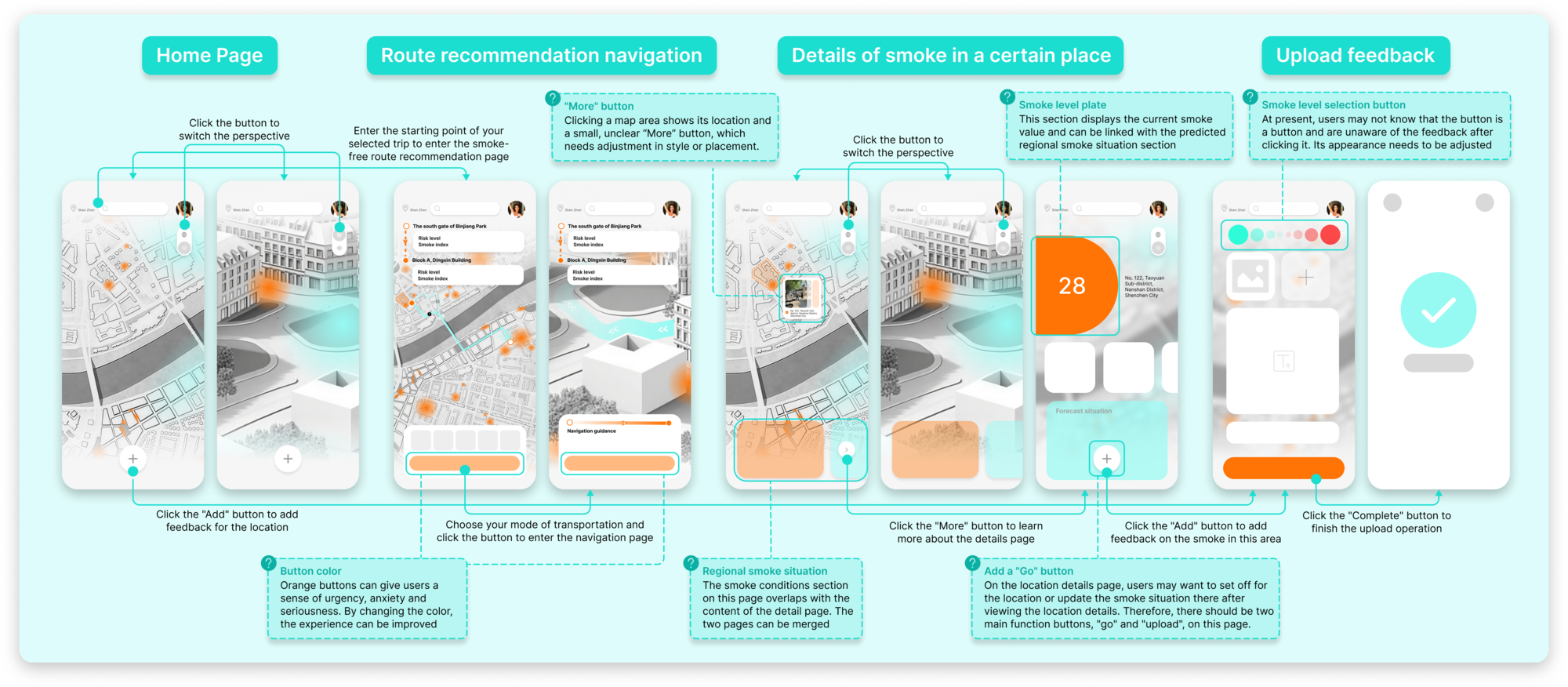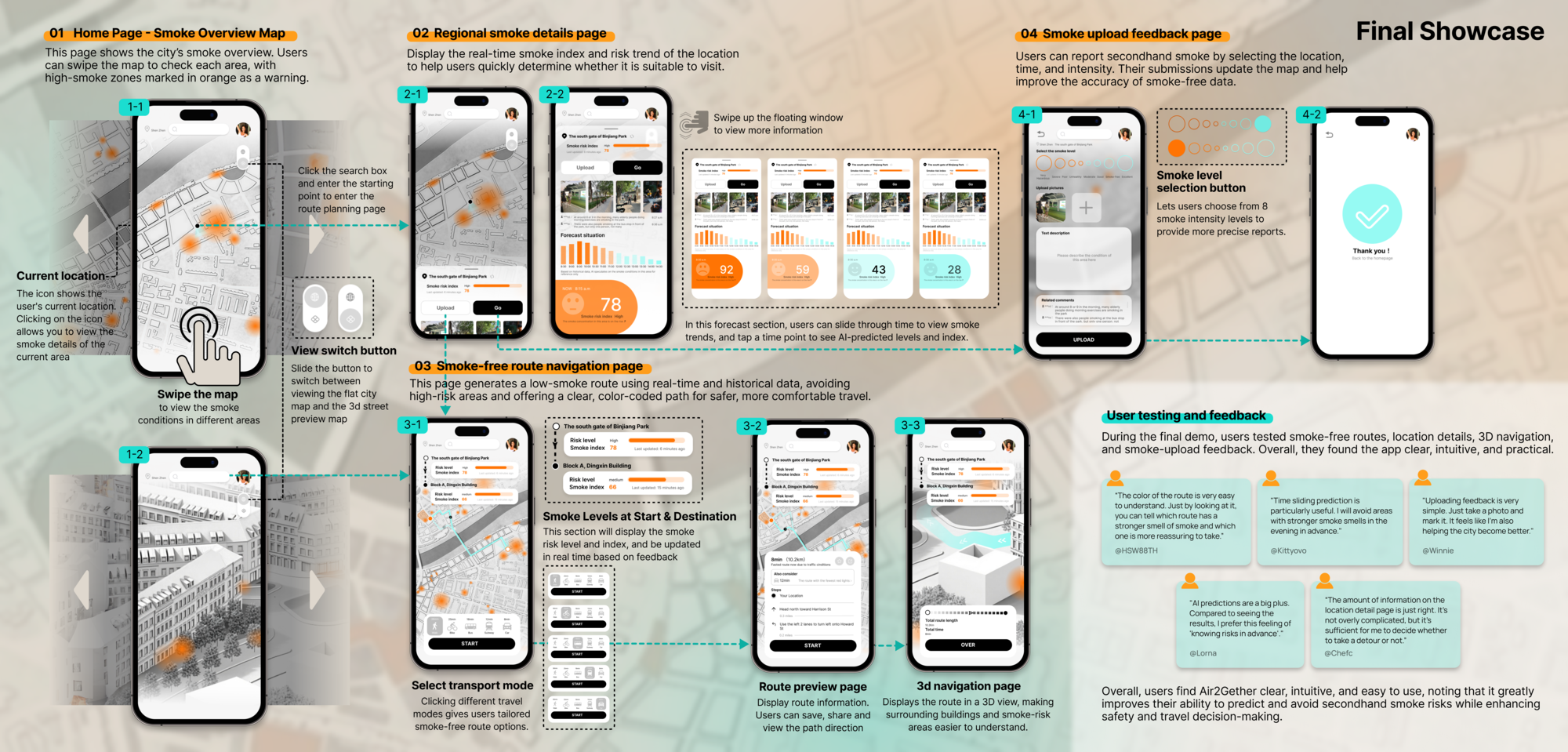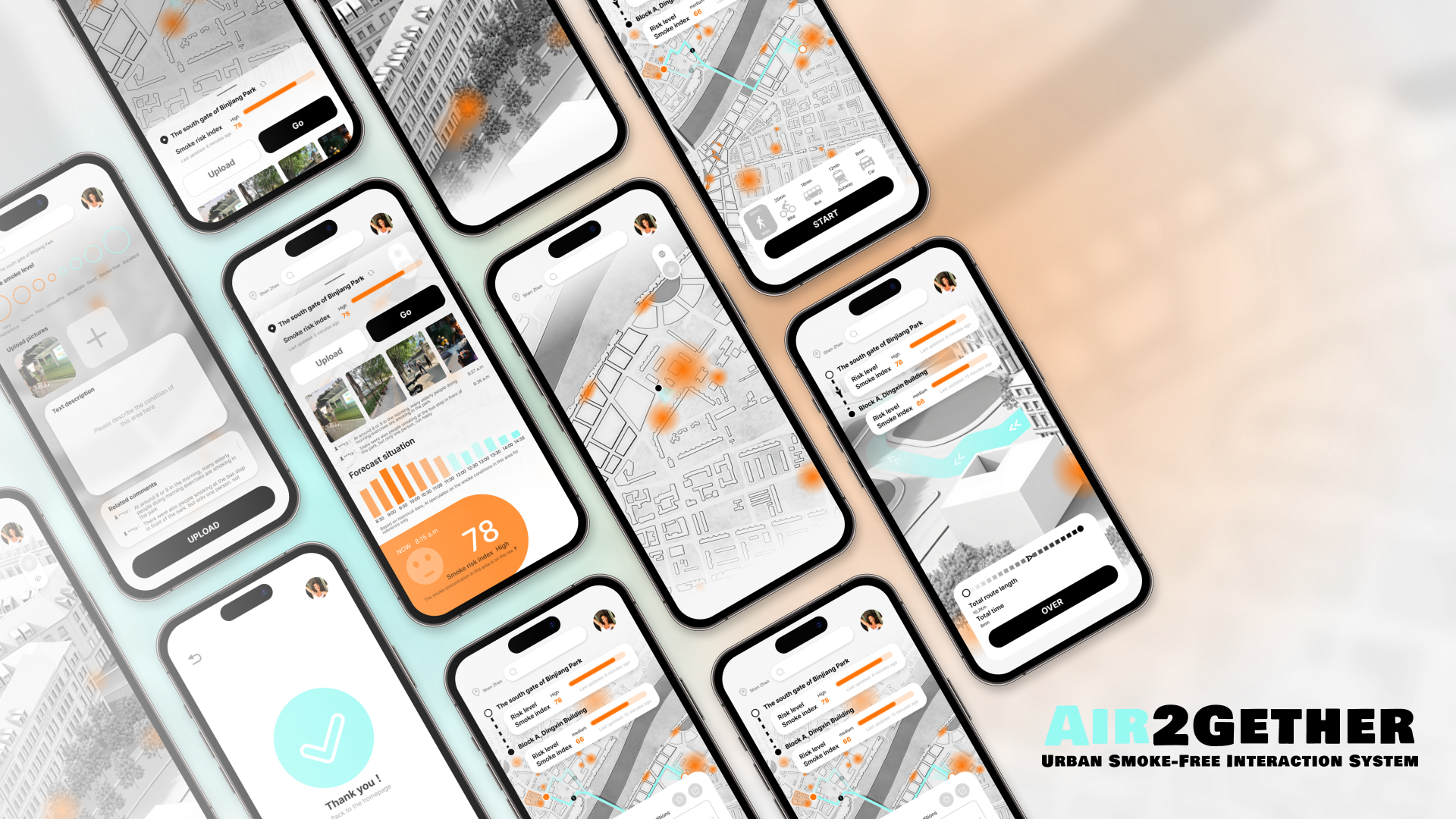
Second-hand smoke exposure remains inevitable in daily urban life due to weak enforcement and lack of smoke-free information, highlighting the urgent need for user-centered intelligent solutions.
The Problem
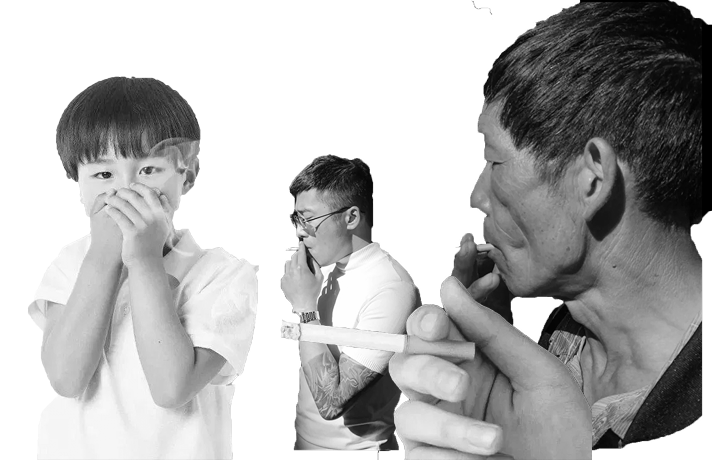
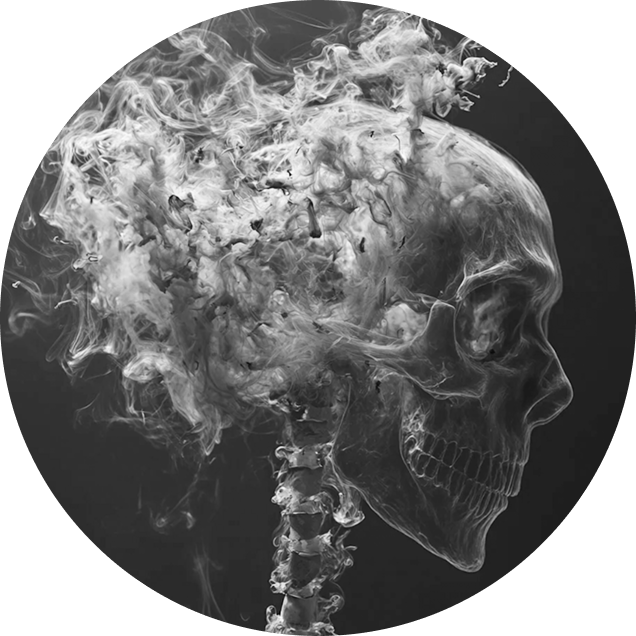
The problem of second-hand smoke exposure is still widespread in urban public spaces. Despite the continuous advancement of smoking ban regulations, insufficient enforcement has led non-smokers to often be forced to inhale second-hand smoke during their daily travels, leisure activities, and waiting times.
Key Impacts
Wide Influence
Affects public health and environmental quality.
Serious Harm
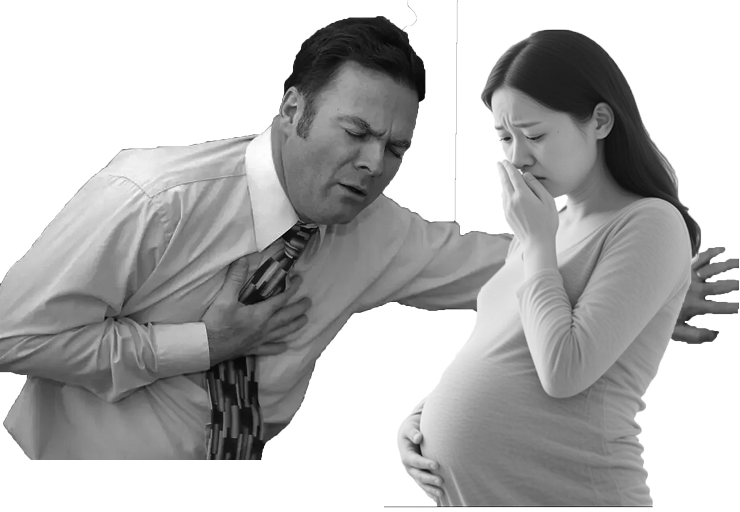
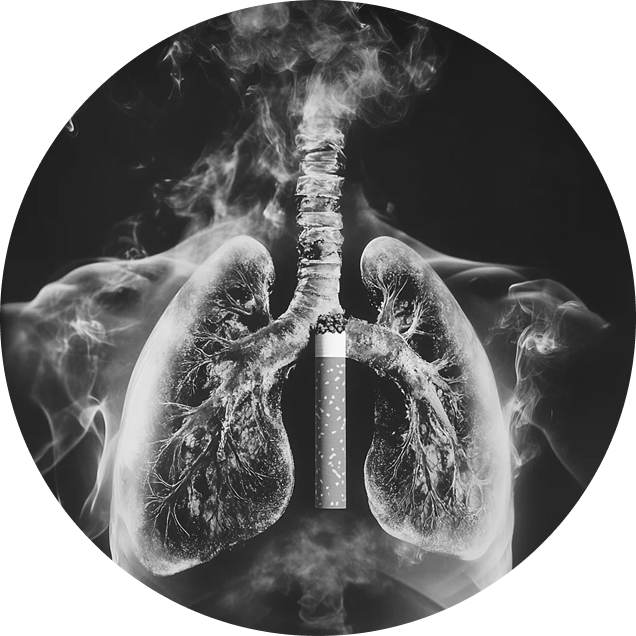
Induces cardiovascular, respiratory diseases and cancer.

Sensitive Groups
Pregnant women, children, and those with allergies.

Not Yet Resolved
Difficult to implement policy; hard to avoid in daily life.
How much second-hand smoke does an ordinary person inhale?
Where are people exposed?
The
entrance of
a restaurant
Downstairs of
residential area
Underground
parking
Near
the
subway station
Random road